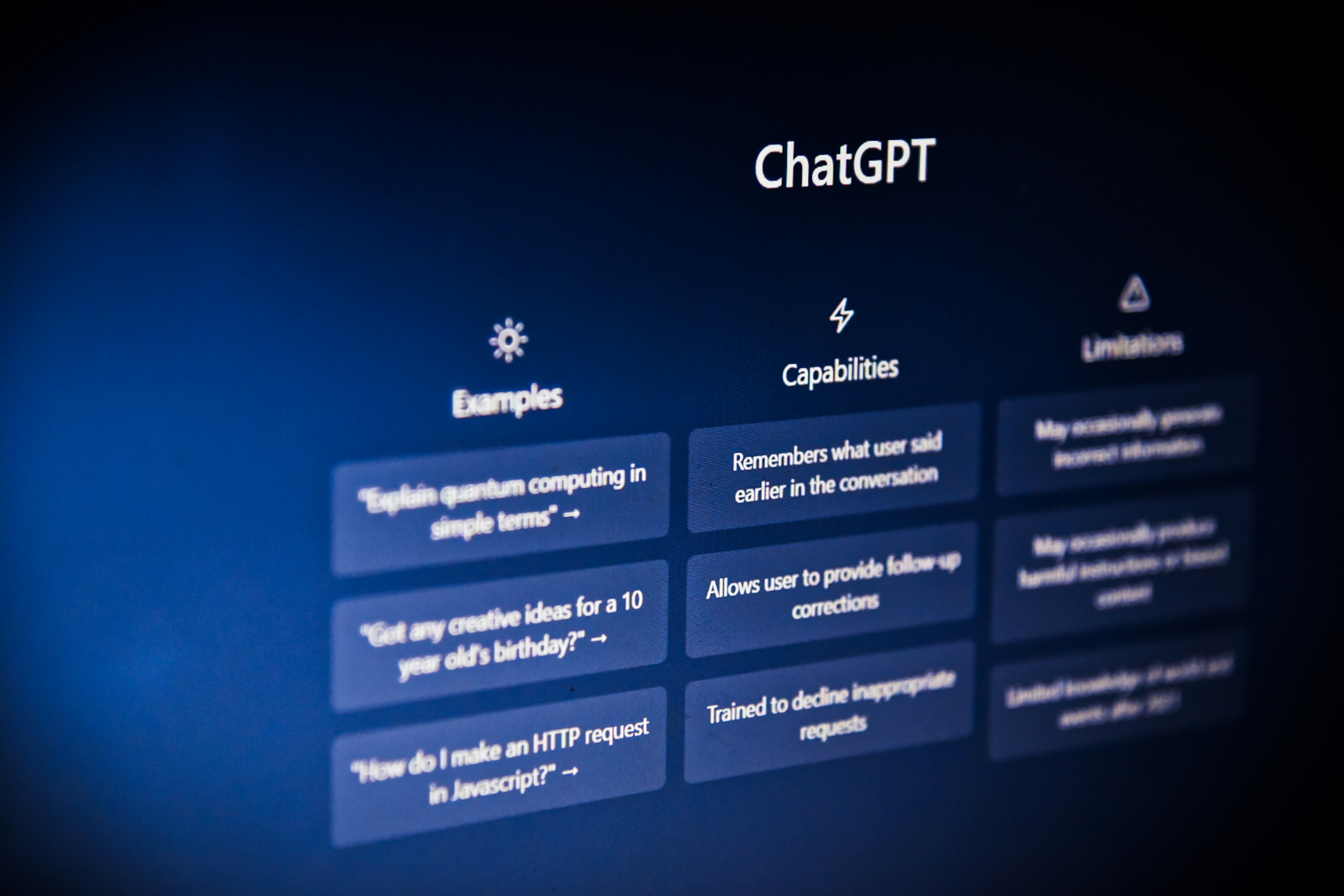

There is no form to submit your business to ChatGPT. No verification badge, no listing to claim. Which leaves a reasonable question: how does a business actually end up in an AI's answer?
The research points at a fairly short list.
The single most repeated finding in citation research is that the answer needs to come first. Kevin Indig's analysis found roughly 44 percent of ChatGPT citations come from the first 30 percent of a page's text.
Practically: lead each section with a direct, self-contained answer of about 40 to 60 words, then elaborate. Anything the model would need surrounding context to understand is harder to quote.
Content with statistics saw roughly 22 percent higher AI visibility, and content with quotations about 37 percent higher, per the 2025 AI Visibility Report.
The mechanism makes sense. An answer engine is assembling a response from attributable claims. A page asserting that reviews are important gives it nothing to attribute. A page stating a specific, sourced figure gives it exactly what it needs.
Tables get extracted more reliably than prose. Question-shaped headings match the way people phrase queries. Lists survive extraction better than paragraphs.
FAQPage, HowTo, Article, Organization, and Author schema all help — but only when the markup reflects what's actually visible on the page. Schema describing content a visitor can't see is a liability, not a shortcut.
AirOps found that for commercial and evaluation-stage queries, 83 percent of AI citations came from pages updated within the past twelve months, with more than 60 percent updated within six.
For a small business, that argues for maintaining a modest number of genuinely current pages rather than accumulating a large archive of stale ones.
This is where AI visibility diverges most from traditional SEO. SE Ranking found roughly 4x higher citation likelihood for domains with substantial Reddit and Quora presence, and about 3x for businesses with profiles on review platforms like Trustpilot, G2, and Yelp.
For a local service business, that translates concretely: real reviews on Google, a presence on the directories your industry actually uses, and genuine participation where your customers ask questions.
Cited passages are nearly twice as likely to use direct, unhedged language. This one is worth handling carefully — hedging exists for good reasons, and stripping out every qualifier to chase citations produces content that's confidently wrong. State clearly what you actually know; keep the caveats where they're warranted.
Keyword stuffing for AI. Hidden text or schema describing invisible content. Any "submit your site to ChatGPT" service. Volume for its own sake — a large archive of thin pages performs worse than a small set of substantive ones. Google has explicitly warned against GEO shortcuts that don't serve real users.
How do I get my business to show up in ChatGPT?
There's no submission process. Publish clearly structured content that answers real questions, keep your business information consistent across the web, maintain genuine reviews, and make sure your pages are crawlable. Citation follows from being a useful, verifiable source.
Does schema markup help with AI search?
Yes, when it reflects visible page content. FAQPage, HowTo, Article, Organization, and Author/Person schema are the most impactful. Schema marking up hidden or implied content can hurt rather than help.
How long does it take to get cited by AI tools?
Reports generally range from a few weeks to a few months, faster than traditional SEO because structure matters more than accumulated authority. Businesses implementing the fundamentals often see citation growth within eight to twelve weeks.
Do reviews affect AI recommendations?
Substantially, particularly for local businesses. AI systems treat review volume and recency as authority signals, and recency appears to matter more than lifetime total. Businesses rated below 4.0 stars are notably underrepresented in AI recommendations relative to their search rankings.
Can I pay to appear in AI answers?
Not currently, for organic citations. Any service claiming to guarantee placement in AI-generated answers should be treated with skepticism.
Ready to build content that gets cited? Schedule a free consultation at jpetrous.com | contact@jpetrous.com | 586-563-6634.





Tombstone Brewery makes craft beer, hard cider, and bottled wine on site — a range most small breweries don't attempt. A client of ours, disclosed upfront, and worth the visit regardless.
Read More
Google publishes review policies almost nobody reads. Here's the working version — what's prohibited, where small businesses actually get caught, and why enforcement is usually invisible.
Read More
There's no one-size-fits-all Google Ads budget — but there is a smart way to figure out what's right for your business. Jonathan Petrous shares the framework and the honest numbers.
Read More


Before you go
Call or send a message. Tell me what you're working on and I'll tell you honestly whether I'm the right fit.