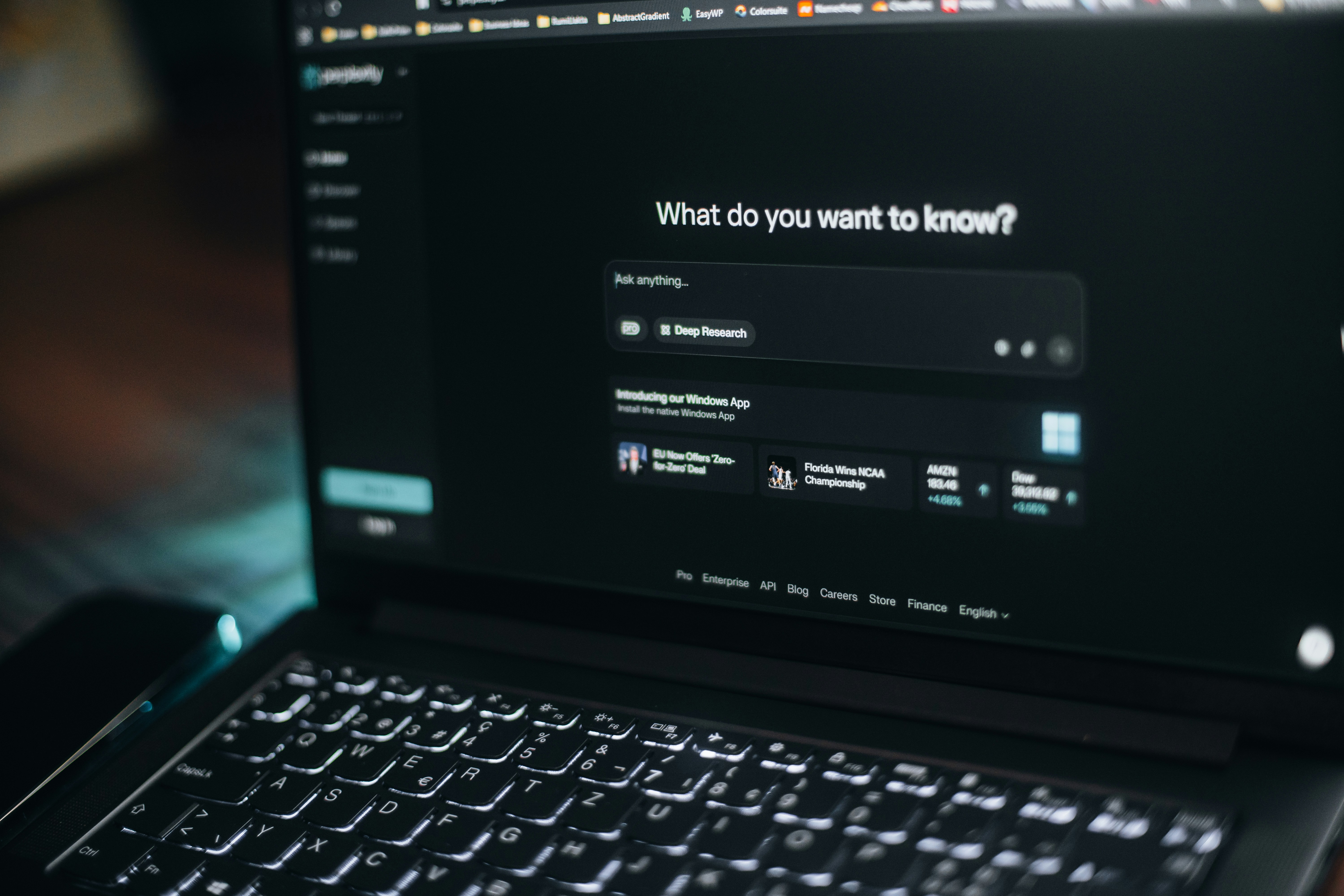

Someone looking for a carpet cleaner used to type "carpet cleaning near me" into Google and pick from a list of links. Increasingly, they ask an AI assistant instead — and get one answer, with a handful of sources credited underneath.
That change is what answer engine optimization exists to address.
Answer engine optimization is the practice of structuring content so AI systems — ChatGPT, Claude, Gemini, Perplexity, Google's AI Overviews — select it as a source when generating an answer.
The distinction from traditional SEO is precise. SEO competes for a position on a page of results that a person then clicks. AEO competes to be the source quoted inside an answer the AI writes before the person sees any links at all. SEO ranks pages. AEO selects sources.
The instinctive assumption is that ranking well on Google means getting cited by AI. The data says otherwise.
Analysis published in 2026 found the overlap between Google rankings and ChatGPT citations sits at roughly 11 to 12 percent, and that about 28 percent of the pages ChatGPT cites most often have effectively no Google visibility at all.
That's the whole argument for treating AEO as its own discipline. Strong SEO gets your content indexed and discoverable, which is a prerequisite. But being findable is not the same as being quotable.
Research into citation patterns has converged on a few consistent findings.
Structure beats prose. Tables, lists, and clearly delineated answers get extracted more reliably than the same information buried in paragraphs.
Evidence earns citations. The 2025 AI Visibility Report found that adding statistics to content increased AI visibility by about 22 percent, and adding quotations by roughly 37 percent. AI systems are looking for something specific to attribute.
Placement matters. Analysis by Kevin Indig found that around 44 percent of ChatGPT citations come from the first 30 percent of a page's text. An answer buried halfway down gives the model less reason to use it.
Confidence matters. Cited passages are close to twice as likely to use direct, unhedged language. "It depends" is honest, but it doesn't get quoted.
Freshness matters, especially commercially. AirOps research found that for commercial and evaluation-stage queries, 83 percent of AI citations came from pages updated within the previous twelve months, and more than 60 percent from pages updated within six.
No. In May 2026, Google published guidance stating that for its own AI features, the work is still SEO — the same fundamentals of useful content, crawlable pages, good page experience, and appropriate structured data.
The honest framing: AEO is a layer on top of SEO, not a replacement for it. You still need to be findable. You now also need to be extractable.
What does AEO stand for?
Answer engine optimization — structuring content so AI answer engines cite it as a source in generated responses.
Is AEO the same as SEO?
No, though they share foundations. SEO optimizes for ranking position on a results page. AEO optimizes for being selected as a source inside an AI-generated answer. Google's own 2026 guidance says that for its AI features specifically, standard SEO fundamentals still apply.
How do you measure AEO?
By citation frequency rather than ranking. The common metric is the percentage of tracked questions where your business appears as a named source. Google Search Console won't show this, so it requires separate tracking.
Does AEO work for small businesses?
Yes, and arguably better than for large ones in some categories, because most local businesses haven't structured their content for extraction yet. The competition for citations in a specific local niche is far thinner than the competition for rankings.
How long does AEO take to work?
Faster than traditional SEO in most reports — often weeks rather than months — because it depends more on how content is structured than on accumulated domain authority.
Want your content structured to get cited? Schedule a free consultation at jpetrous.com | contact@jpetrous.com | 586-563-6634.





The businesses winning in Michigan aren't chasing trends. Jonathan Petrous shares a practical 2027 marketing playbook built specifically for the Michigan small business market.
Read More
Great local businesses in Marysville, Chesterfield, and Macomb Township are invisible online — and it's fixable. Jonathan Petrous explains the three most common causes and exactly what to do about them.
Read More
Tight marketing budget in Port Huron or the surrounding area? Jonathan Petrous shares the highest-leverage moves local businesses can make right now — most of them free or nearly free.
Read More


Before you go
Call or send a message. Tell me what you're working on and I'll tell you honestly whether I'm the right fit.