

Liberty House Recovery Center is a residential drug and alcohol treatment facility in Fenton, Michigan, with a 12-bed program on a 34-acre property. They came to us as a referral from Hour Media, and they've since become a returning client.
They're good people doing genuinely difficult work well. And designing for them requires a different set of instincts than almost any other client.
Most marketing assumes a reader who is comparing options with a clear head. Someone choosing a contractor, a restaurant, a brewery.
The person reading a treatment center's advertisement may be in the worst period of their life. Or it's a parent, a spouse, or an adult child looking on someone else's behalf, frightened and out of their depth. Some are reading it in a waiting room. Some have read a dozen of these already.
That changes every decision. The reader isn't evaluating a purchase — they're looking for a reason to believe things could be different, and they are exquisitely sensitive to anything that feels like a sales pitch.
Marketing for treatment and crisis services is read by people who may be in acute distress or acting on behalf of someone who is. The design has to establish calm and credibility immediately, because a reader in that state has very little tolerance for anything that reads as promotional.
This is the line that matters most, and it's an ethical line before it's a regulatory one.
Recovery is difficult and outcomes vary. Any material that implies a guaranteed result, a easy path, or a certain outcome is doing harm — to the reader who believes it and is failed by it, and to the facility that has to live up to it.
The honest approach is to communicate what a program genuinely offers: the setting, the clinical approach, the credentials, the practical details like insurance. Concrete facts, plainly stated. That's more reassuring than any promise, because a person in crisis is looking for something solid rather than something hopeful.
There's also a real regulatory dimension in this sector — advertising standards for treatment services are stricter than most industries, and for good reason. But the ethical instinct gets you to the right place before the rules do.
Calm rather than urgent. Most advertising manufactures urgency. Here, urgency is already present in the reader. The material's job is to lower the temperature, not raise it.
Warm rather than clinical. The setting matters — a quiet property, private rooms, walking paths. That's not amenity marketing; it's evidence that someone thought about what a person in early recovery actually needs.
Specific rather than aspirational. Bed count, program structure, therapeutic approach, insurers accepted. Facts are trustworthy. Adjectives are not.
Dignified. No imagery or language that treats the reader as a problem to be solved. Whoever is reading is already carrying enough.
In treatment and healthcare marketing, specific factual information — program structure, clinical approach, credentials, insurance accepted — builds more trust than aspirational language. A reader in crisis is looking for something concrete to hold onto, not encouragement.
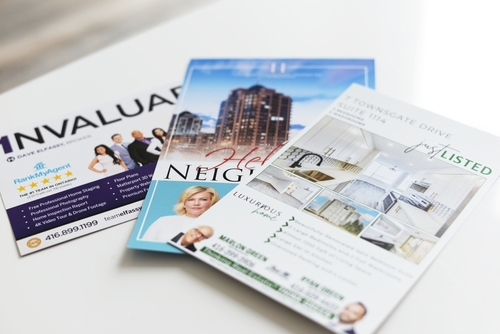
We support Liberty House on an ongoing, as-needed basis. That's included print advertising for Hour Detroit and other regional magazines, a brochure packet, and invitations for their open house.
Different formats, one consistent standard. A magazine ad reaches someone who wasn't looking. A brochure goes to someone already considering. An open house invitation goes to people in the professional and local community. Each needs a different tone within the same identity — and each has to stay on brand, because inconsistency in this sector reads as instability.
The same instincts apply to healthcare, legal services around difficult life events, funeral services, crisis and family services, and anywhere the reader might be at a low point:
Assume the worst day. Design for the reader in the hardest version of their situation, not the comfortable one.
Facts over feelings. Concrete information is more comforting than reassurance.
Never manufacture urgency. It's already there, and adding to it is manipulation.
Make the next step obvious and easy. A phone number that's easy to find matters more than anything else on the page.
Say what you actually do. Overpromising in a sensitive category isn't a marketing risk. It's a harm.
What makes marketing for treatment centers different?
The reader may be in acute distress or acting for someone who is. Materials need to establish calm and credibility immediately, avoid manufactured urgency, and never imply guaranteed outcomes.
Are there advertising rules for addiction treatment providers?
Yes. This sector carries stricter advertising standards than most, covering claims about outcomes, certification requirements on major ad platforms, and rules that vary by jurisdiction. Any provider marketing in this space should confirm current requirements with their own compliance or legal counsel.
How do you write about sensitive services without overpromising?
Describe what the program actually provides — structure, clinical approach, credentials, setting, insurance accepted — rather than the outcomes someone might achieve. Specificity is credible; assurance is not.
What imagery works for healthcare and treatment marketing?
Real environments over stock emotion. Photography of the actual setting communicates something true. Generic imagery of people looking hopeful reads as manufactured to an audience that has seen a lot of it.
Should sensitive-category marketing use urgency tactics?
No. Urgency tactics are inappropriate where the reader is already under pressure, and they undermine the trust the material is trying to build.
How do you keep tone consistent across different materials?
Establish the standard once — how the organization sounds, what it will and won't claim, what the visual identity permits — and apply it across every format. In sensitive sectors especially, inconsistency reads as instability.
If you or someone you know is looking for support, Liberty House Recovery Center can be reached at (810) 242-3486 or libertyhouserecoverycenter.com. Their care team is the right first contact for questions about treatment.
Work in a field where getting the tone right actually matters? Schedule a free consultation at jpetrous.com | contact@jpetrous.com | 586-563-6634.







.jpg)
The businesses winning in Michigan aren't chasing trends. Jonathan Petrous shares a practical 2027 marketing playbook built specifically for the Michigan small business market.
Read More
Great local businesses in Marysville, Chesterfield, and Macomb Township are invisible online — and it's fixable. Jonathan Petrous explains the three most common causes and exactly what to do about them.
Read More
Tight marketing budget in Port Huron or the surrounding area? Jonathan Petrous shares the highest-leverage moves local businesses can make right now — most of them free or nearly free.
Read More


Jpetrous Creative Services proudly supports businesses across:
Macomb County • St. Clair County • Metro Detroit • Southeast Michigan
Including communities like:
New Baltimore • Chesterfield • Sterling Heights • Clinton Township
St. Clair • Marysville • Port Huron • Rochester • Auburn Hills • Detroit



























Before you go
Call or send a message. Tell me what you're working on and I'll tell you honestly whether I'm the right fit.