

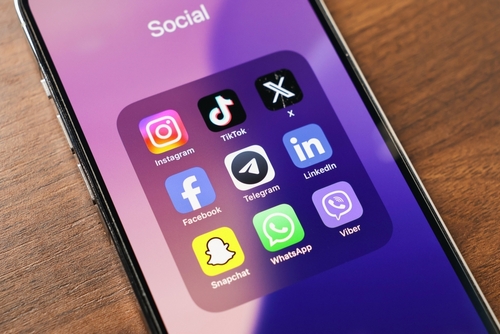
Social media is no longer optional for small businesses—it’s the public stage where credibility is earned. In today’s digital economy, potential customers don’t just look at your website before making a purchase; they scroll your Instagram feed, check your LinkedIn activity, or watch your TikTok videos. What they see (or don’t see) becomes social proof. Even if they’ve never bought from you, your posts act as evidence of your expertise, professionalism, and relevance. The truth is that likes and comments matter less than the perception your content builds. Done right, social media can transform from a time-consuming obligation into one of your most powerful trust-building tools.
Many SMBs treat social media as a box to check—something they post to when they have time or when business feels slow. The result is a feed filled with inconsistent content: low-quality images, off-brand messaging, or sporadic updates that leave followers wondering if the business is still active. Inconsistent activity doesn’t just weaken engagement—it damages credibility. Imagine a potential customer checking your profile only to find your last post was months ago. To them, inactivity suggests instability, and instability discourages trust. Worse, poorly designed graphics or content that doesn’t align with your brand story can confuse your audience and dilute your message. For SMBs competing in saturated markets, this lack of strategy is a missed opportunity to turn social channels into credibility machines.
At Jpetrous Creative Services, we help SMBs transform social media from a random posting effort into a strategic system. The key is building a content framework with clear pillars: education (helpful tips or insights), proof (testimonials, reviews, case studies), culture (behind-the-scenes, team highlights), and offers (calls-to-action that drive inquiries). By creating content categories and using templates, you eliminate the guesswork and ensure consistency. High-quality visuals, professional branding, and clear messaging elevate your presence, making every post feel like a proof point. Instead of just posting for the sake of it, your feed becomes a portfolio that shows what you do, why you do it, and how customers benefit. This not only saves you time but also ensures every piece of content works toward building trust and driving results.
When your social media consistently reinforces your brand story and showcases proof, you create a compounding effect. Followers begin to engage more often, your posts get saved and shared, and direct messages turn into inquiries. Over time, these micro interactions add up to macro results: more website traffic, more consultations, and ultimately more sales. Social proof isn’t about going viral—it’s about building trust at scale. According to recent data, 30% of short videos have watch rates over 81%, proving that quick, authentic content resonates most with today’s audience (Yaguara, 2025). For SMBs, that means short-form video, customer shout-outs, and real stories can become some of the highest-ROI marketing investments. The businesses that lean into this approach create an online presence that feels alive, authentic, and trustworthy—qualities that directly convert engagement into revenue.
In 2025, short-form video continues to dominate. Platforms like TikTok, Instagram Reels, and YouTube Shorts have become the default way people consume content. Studies show that 96% of consumers prefer short-form video over long-form content when engaging with brands (Popular Pays, 2025). For SMBs, this is a golden opportunity because video no longer requires expensive equipment or big production budgets. With a smartphone, good lighting, and a clear script, small businesses can create clips that rival larger competitors in reach and engagement. What’s more, authenticity is winning over polish. Consumers value real, transparent content over staged perfection, and brands that show their human side are building stronger connections. The rise of micro-influencers also means SMBs can partner with niche voices who already have trust within their local or industry communities, amplifying their message without breaking the bank.
When implemented consistently, this approach builds not only visibility but also credibility, which is what ultimately drives conversions.
Q: Why is social media critical for SMBs today?
A: Customers use social media as a credibility check. Before they buy, they’ll often scroll your feed to see if you’re active, consistent, and trustworthy. A polished presence builds confidence faster than almost anything else.
Q: How can small businesses turn posts into sales?
A: The key is intention. Create posts that educate, inspire, or prove your value, then pair them with a clear call-to-action. That could be as simple as “Click the link in our bio” or “DM us to book.” When your posts guide people toward the next step, they become sales tools—not just content.
Q: What’s one easy win for SMB social media?
A: Short-form video. Even a 30-second clip answering a common customer question can generate more engagement than a dozen static posts. The best part? You can repurpose that same clip across Instagram, TikTok, LinkedIn, and your website.
What is social proof?
Social proof is evidence—reviews, testimonials, case studies, or content—that shows others trust and value your business.
How often should small businesses post on social media?
Consistency matters more than volume. Posting 3–5 times per week is enough to stay relevant without overwhelming your team.
Do I need to be on every social platform?
No. Focus on where your audience spends time. For most SMBs, Instagram, Facebook, and LinkedIn are priorities. TikTok can be powerful for visual or consumer-facing businesses.
What’s better: quality or quantity?
Quality always wins. A few thoughtful, on-brand posts are more effective than daily filler content that doesn’t align with your message.
Turn your social media into a credibility machine with Jpetrous Creative Services. We’ll help you build a consistent, strategic presence that turns posts into proof and proof into sales.






.jpg)
The businesses winning in Michigan aren't chasing trends. Jonathan Petrous shares a practical 2027 marketing playbook built specifically for the Michigan small business market.
Read More
Great local businesses in Marysville, Chesterfield, and Macomb Township are invisible online — and it's fixable. Jonathan Petrous explains the three most common causes and exactly what to do about them.
Read More
Tight marketing budget in Port Huron or the surrounding area? Jonathan Petrous shares the highest-leverage moves local businesses can make right now — most of them free or nearly free.
Read More


Jpetrous Creative Services proudly supports businesses across:
Macomb County • St. Clair County • Metro Detroit • Southeast Michigan
Including communities like:
New Baltimore • Chesterfield • Sterling Heights • Clinton Township
St. Clair • Marysville • Port Huron • Rochester • Auburn Hills • Detroit




































Before you go
Call or send a message. Tell me what you're working on and I'll tell you honestly whether I'm the right fit.