
Kyle Media publishes two of the most recognized names in boating: Great Lakes Scuttlebutt, founded in 1992, and Latitudes & Attitudes, the top-selling boating lifestyle magazine on newsstands nationwide.
It's also, for the most part, a family-run operation. Which means the same thing it means at every family-run business: the passion is obvious in every article and every interview, and there are only so many hands.
We've been working together for over four years. It started with a cold email.
We reached out to Erik Kyle to ask whether he needed help with content. We didn't particularly expect a reply. He answered with a small initial task, that task went well, and four years later it's an ongoing collaboration and a genuine friendship.
Worth noting what the arrangement is not: there's no retainer. Every project is quoted and billed individually. He keeps coming back anyway, which is a harder thing to earn than a signed monthly agreement.
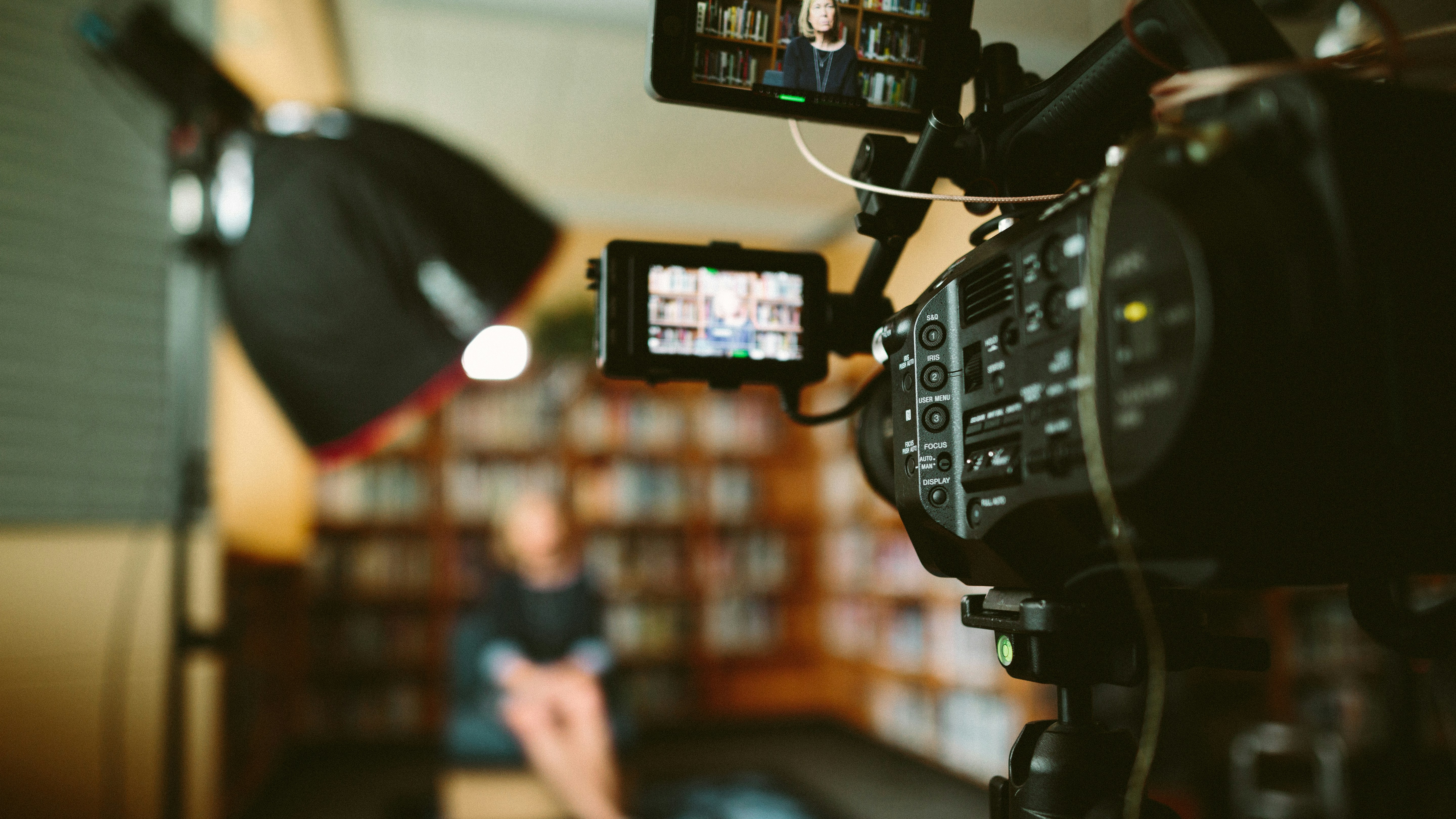
Erik travels constantly — boat shows around the country, interviewing vendors and businesses, giving their brands attention and airtime. He comes back with interview footage, b-roll he shot himself, and additional content vendors have sent him.
That's a lot of raw material. And raw material is not content.
This is the specific bottleneck that catches small publishers and small businesses alike. Capturing footage is the part people enjoy and the part that feels productive. Editing is the part that turns it into something publishable, and it is slow, unglamorous, and easy to postpone. Footage accumulates on drives. Good interviews go unpublished. The gap between what a business has recorded and what it has actually released widens every month.
For most small businesses, the bottleneck in video isn't capturing footage. It's the editing that turns footage into something publishable. Raw material accumulates faster than anyone has time to cut it, and unedited footage generates exactly zero return.
We're Kyle Media's video editor. Erik shoots and sends; we assemble and deliver finished, publish-ready content.
Long-form video for YouTube. Wide format, highest resolution available, cut from interview footage, b-roll, and vendor-supplied material into a finished piece.
Custom YouTube thumbnails. The thumbnail is the entire click decision on YouTube. Treating it as an afterthought wastes the video behind it.
Short-form vertical clips. What we call viral clips — the same recorded content reformatted vertically for Reels and TikTok.
Boat and yacht walkthroughs. These are the favorites to work on. A walkthrough has natural structure and genuine visual payoff, and the audience for them is unusually engaged.
Here's the part worth paying attention to if you produce any video at all.
A single five-minute interview reliably yields fifteen to twenty short-form videos.
Not by padding or repeating. A five-minute conversation contains that many genuinely distinct moments — a strong opinion, a specific piece of advice, a surprising number, a funny aside, a clear explanation of one thing. Each of those stands alone as a short. The long-form piece serves the audience that wants depth; the clips serve the much larger audience scrolling past.
The footage was already shot. The interview already happened. The only additional input is editing time.
A single five-minute interview can reliably produce fifteen to twenty short-form vertical videos. The distinct moments are already in the conversation — a strong opinion, a specific tip, a surprising number. Extracting them requires editing time, not additional filming.
A wide horizontal video posted to a vertical feed doesn't perform. It occupies a fraction of the screen, the subject is too small to read at a glance, and text overlays that worked on a widescreen edit become unreadable.
Reformatting isn't cropping. It's reframing — keeping the subject centered as they move, resizing text for a phone held at arm's length, and finding the cut point where a clip becomes self-contained. Done properly, it's a different edit of the same material rather than the same edit in a different shape.
If you're filming anything — job sites, customer conversations, product walkthroughs, event coverage — the same arithmetic applies. You almost certainly have more usable content than you're publishing.
The constraint isn't your camera. It's the hours between recording and releasing. That's a solvable problem, and solving it doesn't require producing anything new.
How many social clips can you get from one interview?
A five-minute interview typically yields fifteen to twenty short-form videos. Longer interviews scale proportionally. The limit is the number of genuinely distinct moments in the conversation, not the runtime.
What is content repurposing?
Taking one piece of content and reformatting it for multiple platforms and formats — for example, cutting a long-form YouTube interview into vertical clips for Reels and TikTok. It multiplies output without multiplying production.
Can you just crop a horizontal video to make it vertical?
Not well. Cropping frequently cuts the subject out of frame and leaves text unreadable. Proper vertical reformatting means reframing the subject throughout, resizing text for mobile viewing, and choosing cut points that make each clip self-contained.
Do YouTube thumbnails actually matter?
Substantially. The thumbnail and title are the entire basis on which someone decides whether to click. A strong video with a weak thumbnail underperforms a mediocre video with a strong one.
Should a small business hire a video editor or do it in-house?
It depends where your bottleneck is. If footage is piling up unedited, that's an editing capacity problem, and outsourcing editing while keeping filming in-house is usually the cheaper fix. If you aren't capturing anything yet, start there first.
What should I send an editor to work from?
Raw footage, any b-roll, and any supporting material you've been given — logos, product shots, existing brand assets. More context produces a better edit. Send everything and let the editor decide what makes the cut.
Sitting on footage you haven't published? Schedule a free consultation at jpetrous.com | contact@jpetrous.com | 586-563-6634.




There's a particular disaster that happens weeks after launch: the site looks great and traffic fell off a cliff. It's preventable, and it's almost always the same handful of causes.
Read More
If you're going to give your work away, document what you gave. A $0 invoice shows the client the real value, keeps your records honest, and anchors every future quote. Here's how to send one without it feeling passive-aggressive.
Read More
Small Business Saturday is November 28. Four local places I've actually bought from — a florist that doubles as a gift shop, a consignment shop, a bakery, and a brewery that bottles its own wine — and what to know before you go.
Read More


Before you go
Call or send a message. Tell me what you're working on and I'll tell you honestly whether I'm the right fit.